
Mentorship and Development Program
Comprehensive Study
The Setag mentorship program was based on the need to develop highly skilled individuals to work remotely, supporting small international offices often separated by distance and time-zones. Building up individual skill sets to work autonomously with a broad range of technology and business skills. Starting with cabling and desktops, progressing into systems, databases, and business analysis.
With hands-on experience overcoming problems protégés build up a diverse understanding of systems architecture and troubleshooting. Program participants are better prepared for peripheral or specialized fields of study. Protégés develop the skills of communicating, documenting, and presenting complex technical issues in a concise and efficient manner for a variety of audiences, both technical and non-technical.
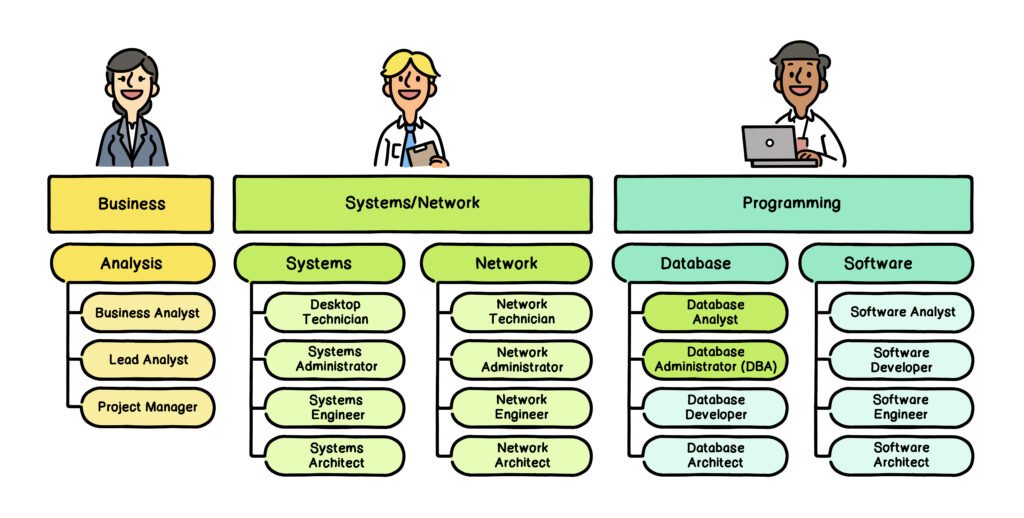
Individual function descriptions are provided below.
Desktop Technician
Installs, configures, maintains, and troubleshoots the client endpoints such as smartphones, laptops, and desktops. Some understanding of both physical and virtual machines including the operating systems and applications resident to the machine.
A Desktop Support Technician, also known as a Desktop Support Specialist or IT Support Technician, is an IT professional who provides technical support to end-users for their computer hardware, software, and network issues. They act as the first point of contact for users experiencing difficulties, troubleshooting problems, installing new equipment, and ensuring the smooth operation of desktop systems.
In a smaller organization a desktop technician may also work at a helpdesk. This is also the case for technicians working with a mobile workforce or a virtual environment. At an entry level technicians may work on a desktop migration or move, setting up machines and ensuring connectivity is available. In a larger organization they will work as, or be delegated work by, helpdesk tier support.
Network Technician
In addition to above, the technician maintains and troubleshoots communications, Network connectivity (LAN, MAN, WAN), and cabling. (understands network protocols, minor NW equipment, and test equipment)
A Network Technician’s job is to ensure an organization’s computer network systems function properly. They install, maintain, and troubleshoot hardware and software, including routers, switches, cabling, and network protocols. They also provide support to users with network issues. Typically installations at this level are preconfigured, and knowledge of switch operating systems are limited.
Network Administrator
In addition to above, access to servers and switches, troubleshoots network devices and connectivity. Adds and deletes users and devices to/from the network.
A Network Administrator is responsible for the smooth operation and security of an organization’s computer network. They install, configure, and maintain network hardware and software, troubleshoot problems, and monitor network performance to ensure reliability and security
Systems Administrator
In addition to Desktop and Network technician requirements, the systems administrator maintains the enterprise applications and operating systems.
A System Administrator, also known as a SysAdmin, is responsible for the maintenance, configuration, and reliable operation of computer systems and networks. They ensure that an organization’s IT infrastructure functions optimally, meets business needs, and is secure. This role involves a wide range of tasks, from installing and configuring software and hardware to troubleshooting issues and providing technical support.
Network Engineer
In addition to a comprehensive understanding of the above, a Network Engineer designs, implements, and maintains an organization’s computer networks, ensuring smooth communication and data transfer. They are responsible for installing, configuring, and supporting firewalls, routers, and switches to optimize network performance and security. Their duties also include troubleshooting network issues, monitoring performance, and staying updated with new technologies.
Systems Engineer
In addition to the above, a Systems Engineer designs, implements, and maintains complex systems, ensuring they meet organizational needs and function efficiently. Systems engineers work closely with IT managers and IT staff, often creating, supporting, and managing IT systems. They analyze requirements, coordinate with teams, and monitor performance to ensure system reliability, security, and scalability. They are responsible for the technical aspects of implementing and maintaining integrated systems. In a larger organization a systems engineer implements the designs systems created by systems architects and focuses on the day-to-day operations and troubleshooting of IT systems.
Network architect
A Network Architect designs, implements, and manages complex computer networks, ensuring they meet an organization’s current and future needs for connectivity, security, and scalability. They develop network strategies, choose appropriate technologies, and create blueprints for integrating hardware, software, and protocols. Network architects also monitor network performance, troubleshoot issues, and analyze data traffic to identify potential upgrades.
Systems architect
A Systems Architect designs, implements, and manages complex IT systems, ensuring they meet business needs, align with architectural standards, and function efficiently. They are responsible for the overall structure of systems, including hardware, software, networking, and data storage, and collaborate with various stakeholders to achieve desired outcomes. Systems architects are more focused on the strategic planning and design of IT solutions, often working with business stakeholders to understand needs and then translate those into technical solutions.
Helpdesk Technician (1,2 &,3)
Also called IT Support Technician or Endpoint Support, this classification can be synonymous with the above Desktop Technician aliases. The main difference is troubleshooting from the phone.
A Help Desk Technician job description typically involves providing first-level technical support to users, addressing issues related to hardware, software, and networks. They troubleshoot problems, guide users through solutions, and escalate complex issues to higher levels. Help Desk Technicians also document interactions and maintain knowledge bases.
Help desk support tiers (1, 2, and 3) are a way to structure IT support based on the complexity of the issues and the expertise required to resolve them. Tier 1 typically handles basic issues, Tier 2 addresses more complex problems, and Tier 3 focuses on the most intricate issues, often involving specialized knowledge or collaboration with engineers.
Database Analyst
A Database Analyst designs, implements, and manages databases, ensuring data security, integrity, and efficient performance. They work with stakeholders to understand data needs, design database structures, and maintain data integrity. They also analyze data, generate reports, and make recommendations to improve database systems.
Database Administrator (DBA)
A Database Administrator (DBA) is responsible for managing and maintaining an organization’s databases, ensuring their security, reliability, and performance. They install and configure database systems, perform regular backups and monitoring, troubleshoot issues, and implement security measures. DBAs also manage user access, ensure data integrity, and collaborate with other teams on database requirements
Database Developer
A Database Developer designs, builds, and maintains databases, ensuring efficient data storage, retrieval, and management. Their responsibilities include database design, coding, performance tuning, and ensuring data integrity and security. They also work to optimize database performance, troubleshoot issues, and collaborate with other developers to integrate databases into applications.
Software Developer
A Software Developer designs, develops, tests, and maintains software applications. They write code, debug issues, and collaborate with teams to deliver efficient and scalable solutions. This role involves understanding user needs, creating software that meets those needs, and ensuring the software is reliable and secure.
Software Engineer
A Software Engineer designs, develops, and tests software applications. They translate user needs into functional software solutions, using programming languages and development frameworks to create and maintain applications. Their responsibilities include designing software architecture, writing code, debugging, testing, and documenting software.
Business Analyst
Business Analyst work involves collecting and analyzing business data, identifying areas for improvement, and recommending solutions to enhance efficiency and profitability. The analysis often requires interviews, surveys, reports, and correlating data. They work closely with stakeholders to understand business needs and translate them into actionable strategies.
Lead Business Analyst
A Lead Business Analyst is a senior role responsible for leading and coordinating complex business analysis activities, often overseeing a team of analysts and acting as a liaison between business users and technology teams. This role involves eliciting, documenting, and prioritizing business requirements, ensuring alignment with business goals, and driving the development of solutions.
Project Manager
A project manager is a skilled professional responsible for planning, organizing, and overseeing the completion of projects. They manage the project’s scope, budget, schedule, and resources to ensure successful delivery, often leading and coordinating teams to achieve project goals. The PM works closely with stakeholders to ensure project goals are met.
Program Contact
Interested in participating in the MADP program? Please use the interest form to send us a message. Our concierge will forward the message to the appropriate staff member.
Our customer contact form and alternative methods of communication are listed in the contact section.